
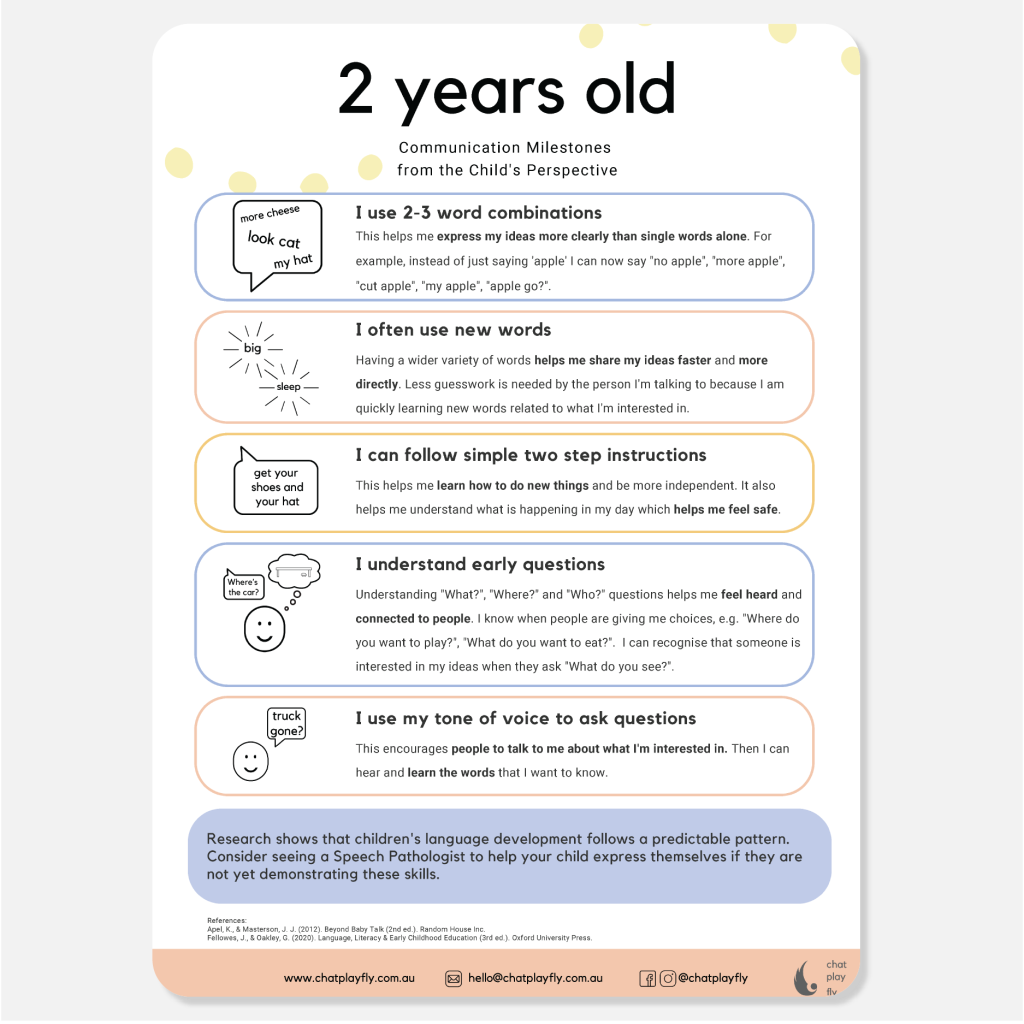
As speech pathologists working with early childhood educators, we often get asked by educators and parents about communication milestones, i.e. what children should be doing by a certain age.
Communication milestone charts can be invaluable to guide and initiate early supports for children when used effectively. But they can also lead educators and families astray if they are not used appropriately. Let’s explore how to best make use of communication milestone charts…
The Value of Milestone Charts
Milestone charts can help you understand the typical order that communication skills develop. They reveal which earlier skills lay the foundation for more complex abilities – like how taking turns in peek-a-boo games develops into taking turns in conversation.
They also highlight aspects of communication you might not typically think about, such as how children use gestures before words or how they learn to repair communication breakdowns.
For parents, these charts provide insight into how children often use communication throughout their day. They can see how skills like requesting, commenting, and questioning help their child engage in daily activities and interactions.
Moving Beyond Checklists
However, milestone charts shouldn’t be relied on as the only source of truth. Here’s why:
Children develop at different rates and in different ways. While one child might have a smaller vocabulary but use it effectively for social interaction, another might know many words but struggle to use them functionally during playtime.
Understanding how skills translate to real-world use is crucial. Rather than just noting that a child can say three-word sentences, we want to also observe how they use these sentences during snack time, in dramatic play, or when resolving conflicts with peers.
Partnering with Families
When discussing communication development with families, avoid using milestone charts as a tool for mandating intervention. Instead, focus conversations on their child’s daily experiences:
- What activities does their child enjoy?
- Where do they see their child struggling to express themselves?
- What would make their child’s day easier or more enjoyable?
This approach helps families understand how communication support could benefit their child’s daily life, rather than feeling pressured to meet arbitrary benchmarks. Where a family is seeking more specific information about communication at different ages, you could share these milestones to help them better understand how children are usually able to express themselves at a given age.
The Bottom Line
Milestone charts are meant to inform, not dictate. They should guide observations and help everyone understand typical development patterns. But ultimately, your support suggestions should centre on helping each child participate fully in the activities and interactions that matter to them.
When we focus on supporting children’s authentic communication needs – whether it’s making friends, sharing ideas, or expressing feelings – we create meaningful goals that motivate both children and families.